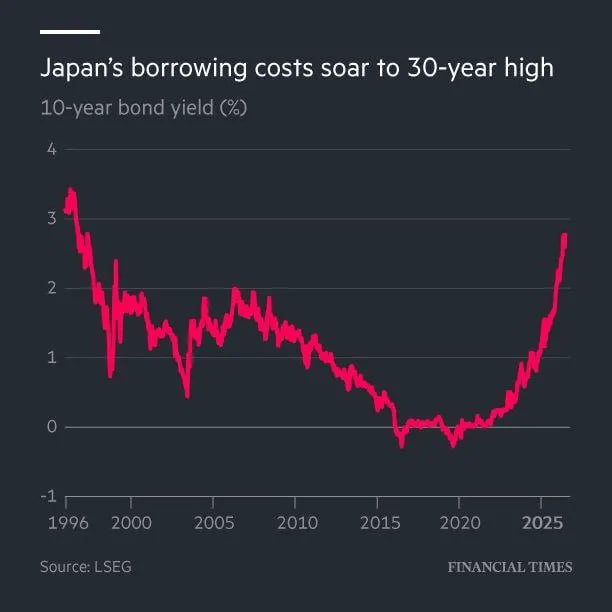
Japan's 10-year government bond yield has climbed to its highest level since 1996, around 2.7%, up sharply from near-zero levels held for most of the 2015-2021 period.
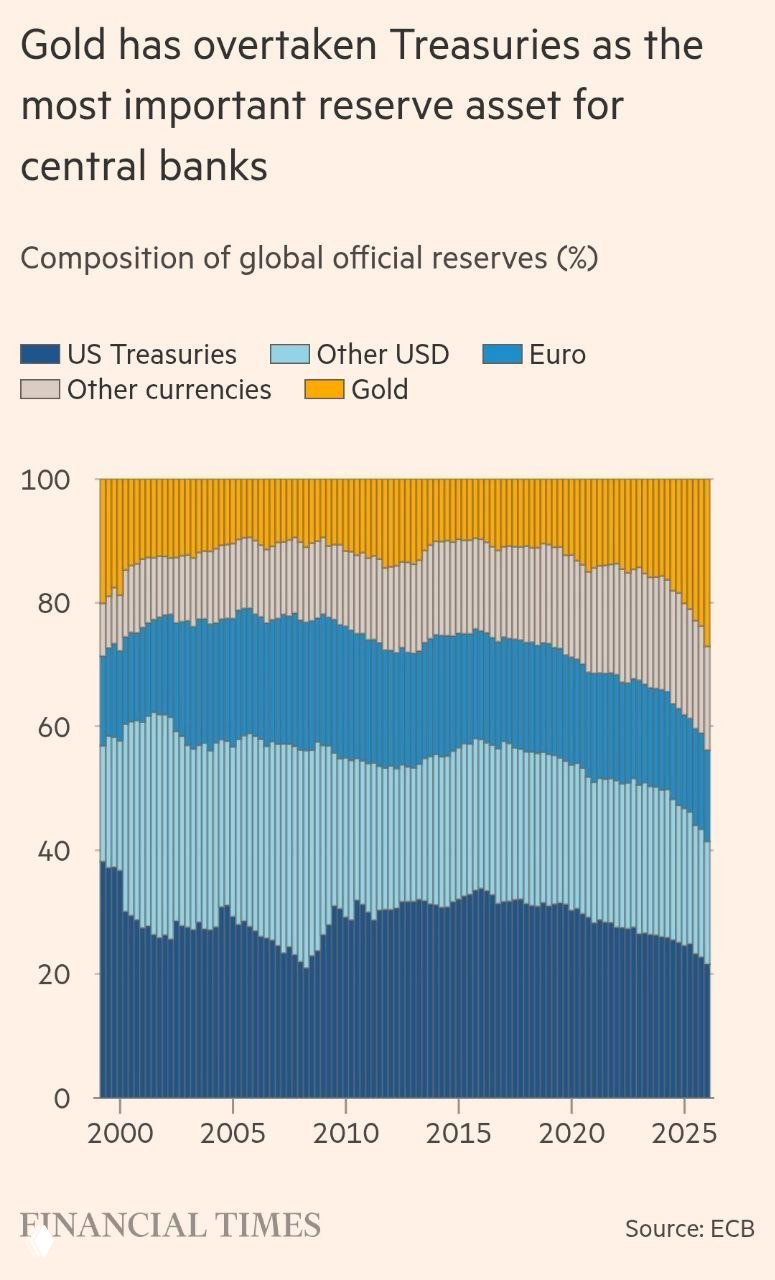
Japan's rise in government bond yields marks a structural shift after years of ultra-loose monetary policy. As the world's largest creditor nation, higher domestic yields could encourage Japanese institutional investors to repatriate capital from overseas bond markets, potentially reducing demand for U.S. Treasuries and European sovereign debt while increasing global borrowing costs.
Investors should closely monitor Japan's normalisation cycle, as it could become a major driver of global capital flows. In this environment, maintaining shorter-duration fixed-income exposure, favouring high-quality financial institutions that benefit from higher interest rates, and holding strategic allocations to real assets such as gold can help mitigate the risks associated with rising global bond yields and increased market volatility.